


Online Football Betting Platform Overview
Eight years ago, placing a legal bet on an NFL game required a trip to Nevada. Today, you can do it from your couch in over forty states while watching your team struggle through another rebuild. The transformation of American sports betting from a semi-underground activity to a mainstream pastime happened faster than anyone predicted, and football sits at the center of this revolution.
The numbers tell a compelling story. The American Gaming Association reported that Americans wagered nearly 150 billion dollars on sports in 2025, with football accounting for roughly 40 percent of that total. The NFL remains the undisputed king of American sports betting, but college football has carved out its own substantial territory, particularly during the fall months when Saturdays become a marathon of games stretching from noon until midnight.
This guide exists because the gap between wanting to bet on football and actually understanding what you are doing is wider than most newcomers realize. The sportsbook interfaces look straightforward enough. Pick a team, enter an amount, submit the bet. But behind that simplicity lies a world of point spreads, juice, key numbers, and implied probabilities that separate recreational bettors from those who approach wagering with genuine understanding.
We are not here to promise you a secret system for beating the books. Anyone making that promise is either delusional or trying to sell you something. What we can offer is clarity. By the time you finish reading, you will understand how odds work, what different bet types actually mean, how sportsbooks make their money, and how to approach betting with a strategy that maximizes your chances of long-term enjoyment without destroying your bank account.
What Is Online Football Betting?

The Evolution of Sports Betting in America
The modern era of American sports betting began on May 14, 2018, when the Supreme Court struck down the Professional and Amateur Sports Protection Act in Murphy v. NCAA. That decision did not legalize sports betting nationwide. Instead, it returned the authority to regulate gambling to individual states, triggering a cascade of legislative action that continues to reshape the landscape today.
Before PASPA fell, Nevada stood alone as the only state where you could legally bet on a single sporting event. The rest of the country existed in a gray zone of offshore websites, local bookies, and office pools that technically violated federal law but rarely faced enforcement. The Supreme Court ruling changed everything by removing the federal prohibition and allowing states to create their own regulatory frameworks.
The pace of legalization exceeded all projections. Within two years of the ruling, more than twenty states had legalized some form of sports betting. By 2026, over forty states permit legal wagering, with most offering mobile betting through licensed apps. The holdouts tend to cluster in certain regions, with several Southern states maintaining opposition, but the overall trajectory points toward near-universal legalization within the next decade.
The market matured rapidly once the legal barriers fell. Major sportsbooks that previously operated only in Nevada rushed to secure licenses in newly opened states. DraftKings and FanDuel leveraged their existing daily fantasy sports customer bases to become dominant forces in the mobile betting space. Traditional casino operators like BetMGM and Caesars used their established brands and physical location networks to build competitive positions. The result is a marketplace with genuine competition, which generally benefits bettors through better odds and promotional offers.
NFL vs College Football Betting
Professional and college football occupy different positions in the betting ecosystem, and understanding those differences matters for anyone looking to wager on both. The NFL generates more total betting handle, but college football offers certain opportunities that the professional game does not.
The NFL landscape features thirty-two teams playing seventeen regular season games each, followed by a brief playoff tournament. This structure creates a manageable information environment. Serious bettors can reasonably track all teams, understand matchup dynamics, and follow injury reports without being overwhelmed. The betting markets are also highly efficient because they attract the most money and the sharpest professional bettors. Finding value in NFL betting is genuinely difficult, which is why consistent winners are rare.
College football presents a fundamentally different challenge. With over 130 teams in the Football Bowl Subdivision alone, plus another hundred in lower divisions, no one can comprehensively track everything. This creates opportunities and pitfalls. The sheer volume of games means sportsbooks cannot devote equal attention to setting lines for a marquee SEC matchup and a Tuesday night game between mid-major programs. Knowledgeable bettors who specialize in particular conferences or focus on smaller programs can sometimes find genuine value that simply does not exist in NFL markets.
However, college football betting comes with regulatory complications that vary by state. Several states prohibit wagering on in-state college teams entirely, concerned about the integrity implications of allowing bets on student athletes from local universities. Other states permit game bets but prohibit player props for college games, reasoning that individual performance markets create stronger incentives for corruption. Before placing any college football wager, you need to verify what your state actually permits.
Understanding Football Betting Odds
American Odds Explained
Every betting line you encounter on an American sportsbook uses a format built around a baseline of 100 dollars. This might seem arbitrary, but it creates a standardized way to express the relationship between risk and reward that works across any actual wager size. The system uses plus and minus signs to distinguish underdogs from favorites, and once you internalize the logic, reading lines becomes second nature.
Negative numbers indicate favorites and tell you how much you need to risk to win 100 dollars. If a line shows -110, you must bet 110 dollars to profit 100 dollars. If the line is -150, you need to wager 150 dollars to win 100 dollars. The larger the negative number, the heavier the favorite. A -300 line means the team is a substantial favorite, requiring a 300 dollar risk for a 100 dollar profit.
Positive numbers indicate underdogs and tell you how much you would win on a 100 dollar bet. A +150 line means a 100 dollar wager returns 150 dollars in profit if successful. A +300 line means you would win 300 dollars on that same 100 dollar bet. The larger the positive number, the bigger the underdog and the larger the potential payout.
The standard line for even-money propositions in football betting is -110 on both sides. When you see a point spread showing Team A -3 (-110) and Team B +3 (-110), both sides require risking 110 dollars to win 100. That extra 10 dollars on each side represents the sportsbook's commission, commonly called the vig or juice. This built-in edge is how sportsbooks make money regardless of game outcomes, and understanding it is fundamental to grasping the economics of betting.
Decimal and Fractional Odds
American odds dominate in the United States, but you will occasionally encounter other formats, particularly if you use international sportsbooks or follow betting content from the United Kingdom or Europe. Knowing how to interpret these alternatives and convert between formats expands your options and prevents confusion.
Decimal odds express your total return on a one-unit stake, including your original wager. A decimal line of 2.50 means a one dollar bet returns 2.50 dollars total, representing 1.50 dollars in profit plus your original dollar. For positive American odds, divide by 100 and add 1, so +150 becomes 2.50 in decimal format. For negative American odds, divide 100 by the absolute value and add 1, so -150 becomes approximately 1.67.
Fractional odds, the traditional British format, express profit relative to stake as a ratio. Odds of 3/2 mean you win 3 units for every 2 units wagered. Most sportsbooks allow you to toggle between formats in your account settings.
How to Read Football Betting Lines
A typical football betting line contains multiple pieces of information compressed into a compact format. Learning to parse these displays quickly allows you to evaluate opportunities efficiently and place bets with confidence. Every sportsbook uses slightly different visual presentations, but the underlying information remains consistent.
Consider this example line for an NFL game between Kansas City and Buffalo. The display might show Kansas City -3 (-110) with a total of 52.5, while Buffalo appears as +3 (-110). This single line contains three distinct betting opportunities. The point spread favors Kansas City by 3 points at standard juice. The game total suggests oddsmakers expect roughly 52 to 53 combined points. And the moneyline shows what each team pays for a straight-up victory.
Point spreads use half-points strategically to avoid pushes. A spread of -3.5 cannot result in a tie; the favorite either covers or does not. Whole-number spreads like -3 can push if the favorite wins by exactly that margin, resulting in all bets being refunded. Key numbers in football, particularly 3 and 7, correspond to common scoring margins, so spreads around these numbers receive extra attention from bettors and oddsmakers alike.
Types of Football Bets

Moneyline Bets
The moneyline represents the purest form of sports betting: pick the team that will win the game. No point spreads, no complications. Moneyline odds reflect the implied probability of each team winning. A -200 favorite has an implied probability of roughly 67 percent, meaning the sportsbook expects them to win two out of every three times. A +200 underdog carries an implied probability of about 33 percent.
The challenge with moneyline betting on favorites is the risk-reward ratio. Betting 200 dollars to win 100 on a heavy favorite feels safe until that favorite loses and you realize how many wins you need to recover. Successful moneyline betting demands either identifying underdogs who win more often than the odds suggest or finding favorites whose implied probability understates their true chances.
Point Spread Betting
Point spread betting dominates American football wagering because it creates balanced action on both sides of a game regardless of the teams' relative strength. The spread serves as a handicap, effectively giving the underdog a head start or requiring the favorite to win by a certain margin. This mechanism makes every game potentially interesting from a betting perspective, even the most lopsided matchups.
Understanding how to interpret spreads is straightforward. If the Chiefs are -6.5 against the Broncos, Kansas City must win by 7 or more points for a bet on them to cash. The Broncos at +6.5 cover if they win outright or lose by 6 or fewer points. The half-point eliminates any possibility of a push, forcing a definitive outcome one way or the other.
Key numbers transform spread betting from simple picks into a nuanced analysis of margin distributions. In NFL history, the most common final margins are 3 and 7 points, corresponding to the scoring values of field goals and touchdowns. Spreads of exactly 3 or 7 carry special significance because they land on these common margins more frequently than other numbers. A team favored by -2.5 has meaningfully different cover probability than one favored by -3.5, even though the difference is just one point.
Totals Betting
Over/under betting on game totals offers a different analytical challenge than picking sides. Instead of evaluating which team will win, you assess the combined scoring environment. Game totals reflect oddsmaker expectations about pace, efficiency, and game script. A matchup between two high-powered offenses might see a total in the mid-50s, while a defensive struggle could sit in the low 40s. Weather conditions, particularly wind and precipitation, frequently lead to lower totals for outdoor games.
Successful totals betting requires understanding factors beyond offensive talent. Close games tend toward conservative play calling, potentially suppressing scoring. Blowouts lead to garbage time points that inflate final totals beyond what the competitive portion suggested.
Prop Bets
Proposition bets break games into individual components wagered on separately. Player props focus on statistical performances like whether a quarterback will throw over a certain number of passing yards. Game props address specific occurrences like whether either team will score in the first five minutes.
The prop market has exploded in recent years, with major sportsbooks offering dozens of options for high-profile games. Understanding how a particular receiver is used in red zone situations or knowing which defensive coordinators consistently limit opposing rushing production can provide edges that general market efficiency does not eliminate. Player props carry higher variance than game bets since individual performance fluctuates more than team outcomes.
Parlay Bets
Parlays combine multiple individual wagers into a single bet requiring all components to win for any payout. A three-team parlay at standard -110 odds pays roughly 6 to 1, turning a 100 dollar wager into 700 dollars total. The escalation continues with each additional leg.
The mathematics inherently favor the sportsbook. Each individual bet carries its own juice, and these edges compound multiplicatively. Professional bettors generally avoid parlays for this reason. Recreational bettors who enjoy parlays should size them as entertainment expenses rather than serious investment vehicles. Same-game parlays, which combine multiple bets from the same game, create occasional opportunities where sportsbook pricing does not fully account for correlation between outcomes.
Teaser Bets
Teasers allow you to move point spreads in your favor across multiple games. A standard six-point teaser shifts every spread by six points, turning a favorite of -7 into -1 or an underdog of +3 into +9. The cost is that you must win all legs, like a parlay, but the improved spreads significantly increase win probability.
The strategy centers on key numbers. Moving from -8 to -2 crosses both the 7 and 3 key numbers, substantially improving coverage chances. Research suggests that carefully constructed teasers crossing key numbers have historically shown positive expected value, though sportsbooks have adjusted their payouts to reduce this edge.
Futures and Live Betting
Futures markets allow you to bet on outcomes determined over extended periods, such as Super Bowl winners or MVP awards. Preseason futures embed the most uncertainty, meaning you need to get positions early to capture value from teams that outperform expectations. Waiting until a team proves itself means paying inflated prices.
Live betting on games as they unfold has become one of the fastest-growing segments. Live markets update continuously, offering new opportunities every few minutes. You have information the opening lines did not include, creating opportunities when live lines fail to incorporate what you are observing. However, sportsbooks build larger margins into live lines to compensate for the informational disadvantage.
How to Start Betting on Football Online
Choosing a Legal Sportsbook
The foundation of your betting experience rests on selecting a properly licensed sportsbook. Verification begins with your state gaming commission website, which maintains lists of licensed operators. Any sportsbook not on your state list operates illegally within your jurisdiction, regardless of how professional their website looks.
Beyond legality, compare factors relevant to your betting style. Market selection varies between books, with some offering deeper prop menus while others focus on competitive odds. Interface design affects daily usability. Mobile app quality matters if you primarily bet from your phone. The major licensed operators include DraftKings, FanDuel, BetMGM, Caesars, and ESPN Bet.
Creating Your Account and Depositing
Registration requires personal information including name, address, date of birth, and partial Social Security number for identity verification. Geolocation technology confirms you are physically present within a legal state. Most registrations complete verification instantly through automated checks.
Funding options typically include online banking transfers, debit cards, and digital wallets like PayPal. Welcome bonuses attach to first deposits at virtually every sportsbook, often matching your deposit up to a certain amount. Understanding bonus terms prevents disappointment since matched funds typically come with playthrough requirements before withdrawal.
Placing Your First Bet
The mechanical process of placing a bet is intentionally simple. Navigate to football, find your game, click the bet type, enter your stake amount, and confirm. Starting with familiar territory makes the experience comfortable. Pick a game you plan to watch featuring teams you understand. Consider the spread or a total for your debut.
Bet sizing for beginners should emphasize learning over maximizing potential returns. Your first bets are paying tuition for experience, and that tuition should be affordable enough that losing does not cause real financial stress.
Football Betting Strategies That Actually Work
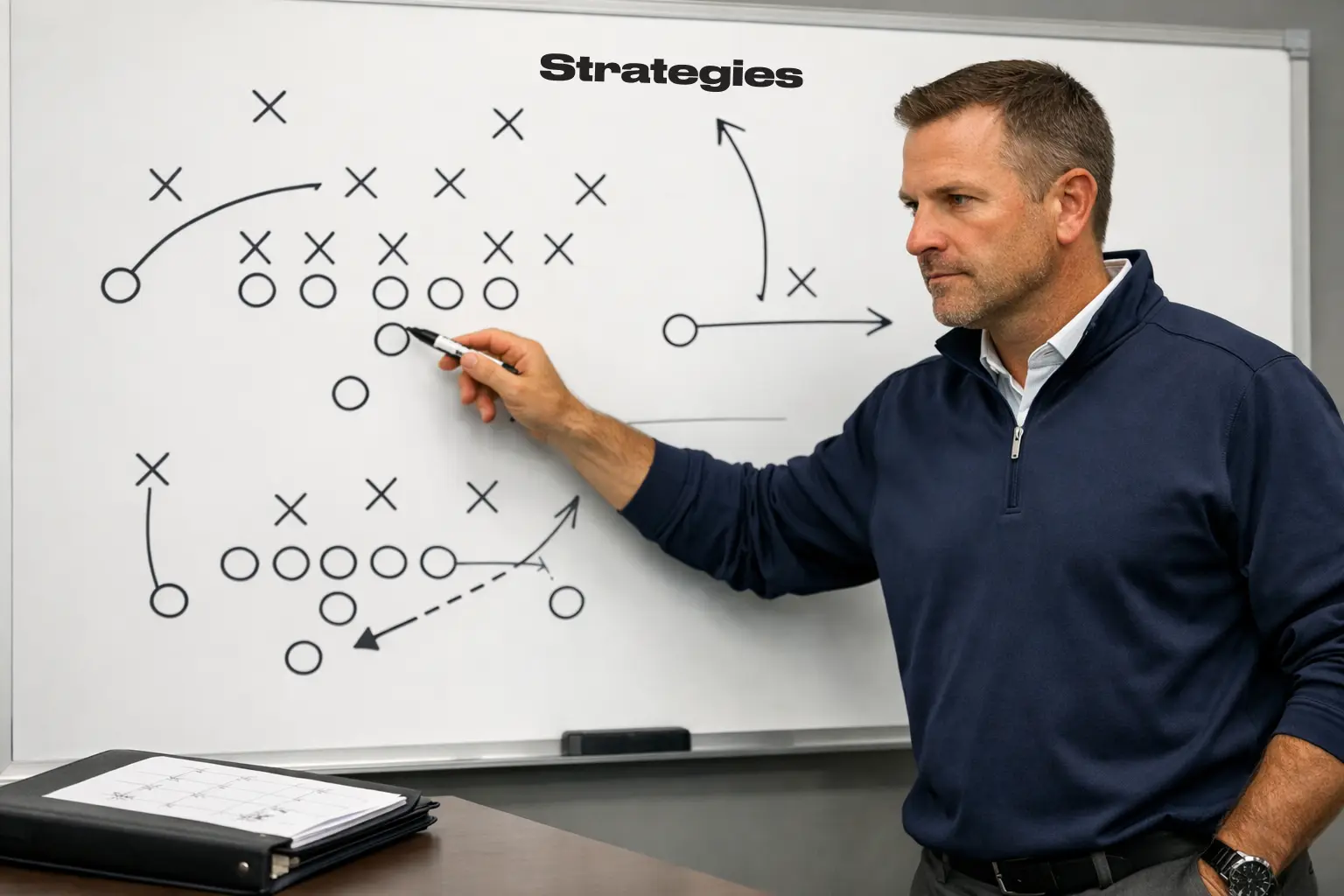
Understanding Value Betting
The concept of value provides the intellectual framework for all successful sports betting. A bet has value when the probability of winning exceeds the implied probability embedded in the odds. If you believe a team has a 55 percent chance to cover but the odds imply only 50 percent probability, that gap represents value. Finding and betting value consistently is the only path to long-term profitability.
Converting odds to implied probability is straightforward arithmetic that every serious bettor must master. For negative American odds, divide the absolute value by itself plus 100. So -110 becomes 110 divided by 210, equaling roughly 52.4 percent implied probability. For positive odds, divide 100 by the odds plus 100. So +150 becomes 100 divided by 250, equaling 40 percent. These conversions tell you what win rate you need to break even at given odds.
The challenge is that estimating true probabilities is genuinely difficult. Oddsmakers are professionals with access to sophisticated models, injury information, and betting patterns. They set lines that attract balanced action precisely because those lines are hard to beat. Claiming you have identified value means claiming you have assessed the situation more accurately than the market, which is a bold claim that deserves critical examination.
Specialization offers the most realistic path to finding value. Rather than trying to beat the market across all games, develop deep expertise in specific areas. Focus on one conference in college football. Study particular bet types like first-half totals. Analyze specific situational spots like divisional underdogs. Narrow focus allows deeper knowledge that occasionally surfaces genuine edges the broader market misses.
Line Shopping and Timing
Holding accounts at multiple sportsbooks creates opportunities to capture better odds through comparison shopping. Different books often post slightly different lines on the same games, and those differences accumulate into meaningful profit over time. A bet at -105 instead of -110 costs less for the same potential payout. A spread of +3.5 instead of +3 wins more often at the same odds.
The mathematics of line shopping compound impressively. Getting just one extra point on two bets per week, assuming those bets would have pushed at the worse number, adds roughly 4 to 5 percent to your expected return over a full season. Consistently finding the best available odds across your betting activity turns marginal bets into profitable ones and good bets into great ones.
Practical line shopping requires some organizational discipline. You need to maintain funded accounts at multiple books, which ties up more capital than betting through a single sportsbook. You need to check multiple sites before placing each bet. The optimal number of accounts depends on your betting volume. Recreational bettors might find three to four accounts sufficient. Higher-volume bettors often maintain six or more.
When you place your bets matters as well. Lines move between their initial posting and game time based on betting action and new information. Sharp bettors who bet early influence line movement, so lines available Sunday night for the following week's games differ from lines available Sunday morning before kickoff. Understanding these patterns and timing your bets accordingly can capture additional value.
Key Numbers and Margin Analysis
Football scoring creates non-uniform distributions of final margins, and understanding this pattern informs strategic decisions around spread betting. The most common NFL final margins are 3 points (occurring roughly 15 percent of the time) and 7 points (occurring roughly 9 percent of the time). Other margins related to common score combinations, like 6, 10, and 14, also appear more frequently than random distribution would predict.
This information matters because spreads crossing key numbers have different value than spreads between key numbers. Moving from -3 to -2.5 gains significant expected value because you no longer lose when the favorite wins by exactly 3. Moving from -5 to -4.5 gains less because 5-point margins are relatively uncommon.
Point buying and selling let you move spreads at posted prices, paying worse odds for better numbers or accepting worse numbers for better odds. The tradeoffs are only worthwhile when they cross key numbers. Buying from -3 to -2.5 typically costs 10 to 15 cents of juice and is often worthwhile. Buying from -5 to -4.5 at the same price rarely makes mathematical sense given the relative frequency of 5-point margins.
Bankroll Management

Defining Your Betting Bankroll
Your betting bankroll is money specifically allocated for wagering that you can afford to lose entirely without affecting your financial obligations or quality of life. This definition is not negotiable. Using rent money to chase losses is not aggressive bankroll management; it is problem gambling that leads to real-world consequences beyond any betting outcome.
Separating betting funds from regular finances creates both practical and psychological boundaries. A dedicated checking account or digital wallet for betting activity makes tracking easier and prevents the mental accounting games that lead to trouble. When your betting account is empty, you stop betting until you choose to add more funds. The clear boundary prevents the slippery slope of just one more deposit.
Setting initial bankroll size depends entirely on your personal financial situation and betting goals. For recreational bettors seeking entertainment value, a seasonal bankroll might be a few hundred dollars allocated from your discretionary entertainment budget. For more serious bettors treating wagering as a skilled hobby, larger bankrolls in the thousands of dollars may be appropriate. The amount matters less than the principle that it represents money you have genuinely allocated for potential loss.
Replenishment policies should be established before you start betting rather than decided in the moment after losses. Will you add funds monthly regardless of results? Only after the bankroll is exhausted? Never, treating the initial amount as a one-time allocation? Each approach has merits, but deciding in advance prevents emotional decisions driven by the desire to chase losses.
Unit Sizing and Stake Management
Expressing bets in units rather than dollar amounts standardizes your wagering and scales automatically with your bankroll. A unit typically represents 1 to 2 percent of your total bankroll. For a 1000 dollar bankroll, one unit would be 10 to 20 dollars. This sizing ensures that individual losing bets do not materially damage your ability to continue betting while allowing meaningful stakes on plays you believe in.
Flat betting, where every wager is exactly one unit, provides the simplest and often most effective approach. The consistency removes decisions about bet sizing from the equation, preventing the common mistake of oversizing bets you feel confident about while undersizing those with genuine value you happen to feel less certain about. Human confidence and actual edge correlate poorly, making flat betting a discipline that improves results.
Strict adherence to your unit size through both winning and losing streaks prevents the common errors that destroy bankrolls. Doubling up after losses to get even faster digs holes that become impossible to escape. Pressing bets after wins on the assumption that you are running hot ignores the independence of each new wager. The disciplined approach feels boring precisely because it removes the emotional highs and lows that make gambling addictive for the wrong reasons.
Choosing the Right Sportsbook
Evaluating Licensed Operators
Legal sportsbooks operating under state regulatory oversight provide protections that offshore or illegal operations cannot match. Your deposited funds must be held in segregated accounts protected from operator bankruptcy. Disputes have formal resolution processes through gaming commissions. Personal information receives mandated security treatment. These baseline protections justify limiting your betting activity to properly licensed operators regardless of any other considerations.
Market selection varies meaningfully between sportsbooks. Major operators offer comprehensive football coverage, but depth differs in areas like prop betting, live betting markets, and college football smaller conference coverage. If your betting interests extend beyond mainstream markets, compare availability before committing primary activity to any single book. Having your preferred market unavailable when you want to bet wastes the analysis that identified the opportunity.
Odds quality differs across books, which is why line shopping matters. Some sportsbooks consistently offer better prices to attract sharp action. Others shade lines toward public positions, offering worse odds on popular sides while providing value on contrarian plays. Understanding where different books tend to offer advantages helps you route bets to maximize value.
Promotional competition benefits bettors through ongoing offers beyond initial welcome bonuses. Profit boosts on specific bets, insurance offers that refund losses under certain conditions, and loyalty programs that return value based on betting volume all contribute to the overall proposition each sportsbook offers. These extras rarely offset poor odds or limited markets, but they matter when comparing otherwise similar options.
Mobile Experience and Features
Smartphone betting dominates the market, with over 80 percent of wagers now placed through mobile apps rather than desktop websites. App quality directly affects your daily experience, from navigation ease to bet slip functionality to live betting responsiveness. Spending a few minutes exploring an app before depositing real money prevents frustration later.
Feature sets vary in ways that matter depending on your betting style. Cash-out options let you settle bets early at reduced payouts, useful for locking in profits or cutting losses before final results. Bet builders create custom combinations from menus of available props. Live streaming integration allows watching games directly through the betting app. These features are not essential for everyone, but their absence might matter to you.
Reliability becomes apparent during high-traffic periods like Sunday afternoons or primetime NFL games. Apps that perform smoothly during testing can bog down when thousands of users rush to place bets before kickoff. Customer support quality reveals itself when problems arise with stuck withdrawals or disputed settlements.
Responsible Gambling

Recognizing Warning Signs
Gambling disorder is a recognized condition that affects a small but significant percentage of people who bet on sports. Understanding warning signs allows early recognition when betting shifts from entertainment to compulsion. The goal is not to create paranoia about enjoying sports betting but to maintain honest self-assessment that catches problems before they become severe.
Chasing losses is the classic warning sign. When losing makes you want to bet more to get even rather than step back, the emotional relationship with gambling has shifted unhealthily. Betting money needed for other obligations, hiding betting activity from family, and irritability when unable to bet all suggest that wagering has moved beyond recreational activity into problematic territory.
Time spent thinking about betting provides another indicator. Recreational bettors enjoy the games, check their bets, and move on with their lives. Problem gambling often involves constant preoccupation with wagering, planning bets, reviewing losses, and anticipating future opportunities in ways that crowd out other interests and responsibilities.
Financial impact assessment should happen regularly and honestly. Losing money on entertainment is normal; that is what entertainment costs. Losing money that compromises financial security, creates debt, or causes material lifestyle changes crosses into problem territory. If you cannot accurately state your net gambling results over the past month and year, you may be avoiding information that would force uncomfortable realizations.
Setting and Maintaining Limits
Every licensed sportsbook offers responsible gambling tools that allow you to constrain your own activity. Deposit limits cap how much money you can add to your account in a given period. Loss limits stop betting when losses reach specified thresholds. Time limits require breaks after extended sessions. Self-exclusion removes access entirely for chosen periods. These tools exist because operators recognize their responsibility to help customers maintain control.
Setting limits proactively while you are thinking clearly is far more effective than trying to impose them during losing streaks or emotional moments. Decide what you can afford to lose weekly or monthly, set those limits in your sportsbook settings, and let the system enforce discipline that willpower alone often cannot maintain.
Resources for problem gambling include the National Council on Problem Gambling helpline (1-800-522-4700), which provides confidential support and referrals. State-specific resources are available through your gaming commission. These services exist because the industry and regulators recognize that some people will develop problems and deserve help addressing them.
Conclusion
Football betting offers a compelling way to deepen engagement with a sport that already captivates millions of Americans. The analytical challenge of handicapping games, the satisfaction of research paying off, and the added stakes while watching all contribute to an experience that many find genuinely enriching. Getting there requires moving past the simplistic view of betting as picking winners toward a more sophisticated understanding of odds, value, and probability.
The fundamentals covered in this guide provide the knowledge foundation that separates informed bettors from those simply gambling on outcomes they do not understand. Knowing how odds work, what different bet types actually mean, and how sportsbooks structure their business lets you participate with full awareness of what you are doing. This understanding does not guarantee winning, but it prevents the frustration of losing to confusion rather than bad luck.
Practical application starts with establishing your betting bankroll, selecting legal sportsbooks, and placing initial bets with appropriate caution. Early wagers should be learning experiences rather than serious attempts at profit. Watching how lines move, experiencing the emotional reality of having money at risk, and reviewing results honestly all contribute to developing the judgment that more sophisticated betting requires.
Strategy development comes after fundamentals are solid. Finding value requires specialized knowledge that takes time to build. Line shopping requires the organizational discipline of maintaining multiple accounts. Bankroll management requires the emotional discipline to follow your rules when deviation is tempting. None of this is impossible, but all of it takes effort that casual bettors rarely invest.
Responsible gambling practices deserve final emphasis because the most important outcome of your betting activity is avoiding harm. Entertainment value, intellectual engagement, and occasional financial wins all pale against the potential consequences of developing a gambling problem. Regular self-assessment, honest financial tracking, and willingness to use available tools when needed protect you from outcomes that no amount of handicapping skill can justify risking.
Frequently Asked Questions
How do I start betting on football online?
Starting with online football betting requires completing a straightforward process that typically takes less than fifteen minutes. First, verify that sports betting is legal in your state by checking your state gaming commission website for a list of licensed operators. Choose a sportsbook from that list based on factors like available betting markets, app quality, and welcome bonus offers. Registration requires providing personal information including name, address, date of birth, and partial Social Security number for identity verification.
After your account is verified, which usually happens instantly through automated checks, select a deposit method and fund your account. Most bettors use online banking transfers, debit cards, or digital wallets like PayPal. Consider claiming a welcome bonus with your first deposit, but read the terms to understand playthrough requirements before assuming the bonus money is immediately withdrawable. Placing your first bet involves navigating to football, selecting a game, choosing a bet type, entering your stake amount, and confirming the wager. Start with small bets on games you plan to watch until you become comfortable with the process.
What does the point spread mean in football betting?
The point spread creates a handicap that balances betting interest between unevenly matched teams. When you see a line showing Kansas City -6.5 and Las Vegas +6.5, the negative number indicates Kansas City is favored to win by more than 6.5 points while the positive number indicates Las Vegas starts with a virtual 6.5-point lead. Betting on Kansas City requires them to win by 7 or more points for your bet to cash. Betting on Las Vegas wins if they win outright or lose by 6 or fewer points.
The half-point eliminates pushes, forcing a definitive outcome. If the spread were exactly 6, a Kansas City win by exactly 6 points would result in all bets being refunded. Using 6.5 ensures every bet either wins or loses based on the final score relative to the spread. Standard spread bets typically carry -110 odds on both sides, meaning you risk 110 dollars to win 100 dollars regardless of which side you choose. Line movement before games reflects betting action and information updates.
Is online football betting safe and legal?
Online football betting is both safe and legal when conducted through properly licensed sportsbooks operating in states that have authorized sports wagering. As of 2026, over forty states permit some form of sports betting, with most allowing mobile wagering through licensed apps. The key to safety lies in verifying that your chosen sportsbook holds a valid license from your state gaming commission.
Licensed sportsbooks operate under regulatory frameworks that mandate consumer protections. Your deposited funds must be held in segregated accounts protected from business creditors if the operator faces financial problems. Personal information receives specified security treatment. Dispute resolution processes exist through gaming commissions if problems arise that customer support cannot resolve. The danger lies in offshore or unlicensed operations that accept American customers despite lacking legal authorization. These sites offer no consumer protections, may refuse withdrawals, and have no accountability to regulators. Sticking exclusively to licensed operators in your state eliminates these risks while still providing full access to football betting markets.
