


Walking into the world of football betting can feel like learning a new language. You see terms like “spread,” “moneyline,” “over/under,” and “same-game parlay” thrown around, and suddenly everyone sounds like they attended some secret betting academy you never knew existed. Here is the good news: these concepts are not nearly as complicated as the jargon suggests. Once you understand the fundamental bet types, you will be reading betting boards like a seasoned professional.
Understanding different bet types matters because each one serves a specific purpose and carries its own risk-reward profile. A moneyline bet operates completely differently from a point spread, and confusing the two could cost you money. More importantly, knowing your options lets you pick the right tool for the right situation. Some games scream for a straight moneyline bet; others make more sense as totals plays. The goal here is to give you the knowledge to make those distinctions yourself.
This guide covers every major football bet type you will encounter at legal sportsbooks in 2026. We will break down the mechanics of each wager, discuss when each type makes strategic sense, and provide real-world examples that show these concepts in action. By the end, you should feel confident navigating any NFL or college football betting market.
Deep Dive: Moneyline Betting Math
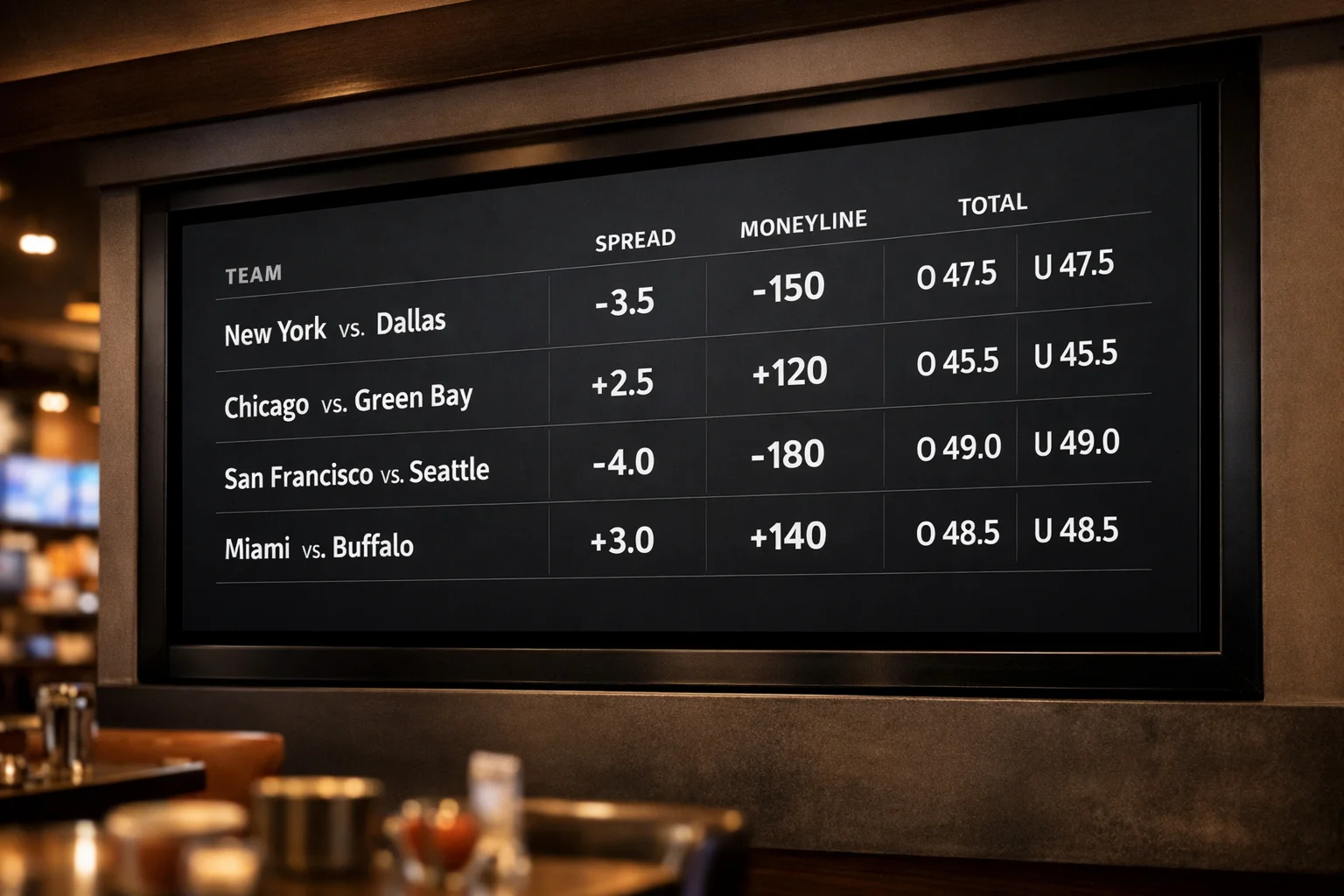
The moneyline represents the purest form of sports betting: pick the winner, collect your money. No point spreads to worry about, no totals to calculate. Your team either wins or it does not. This simplicity makes moneyline betting the natural starting point for beginners, though experienced bettors use it strategically in specific situations.
American odds on moneylines display as either positive or negative numbers. Negative numbers indicate the favorite—the team expected to win. If you see the Kansas City Chiefs listed at -180, this means you need to wager $180 to win $100 in profit. Positive numbers indicate the underdog. The Las Vegas Raiders at +155 means a $100 bet returns $155 in profit if they pull off the upset. The larger the negative number, the heavier the favorite. The larger the positive number, the bigger the underdog.
Calculating payouts becomes second nature with practice. For favorites, divide 100 by the odds number, then multiply by your stake. At -180, your $180 wager returns $100 profit ($180 / 1.80 = $100). For underdogs, multiply your stake by the odds divided by 100. A $100 bet at +155 returns $155 profit ($100 x 1.55 = $155). Either way, you also get your original stake back if you win.
Moneylines make the most sense in specific scenarios. Heavy favorites on the spread sometimes offer better value as moneyline plays when the juice on the spread gets excessive. If a team is favored by three points at -115 but the moneyline sits at -150, you might prefer paying the extra juice to eliminate the possibility of losing on a field goal margin. Conversely, big underdogs offer massive payouts on the moneyline that spread bets cannot match. A team catching ten points might be +300 or +400 on the moneyline—worth a small play if you genuinely believe they can win outright.
The downside of moneylines becomes apparent with moderate favorites. Laying -200 or -250 requires significant risk for modest returns, and even good teams lose outright several times per season. Many professional bettors avoid moneyline favorites above -180 for this reason, preferring the spread where the margin for error is built into the wager.
Point Spread Betting Mastery
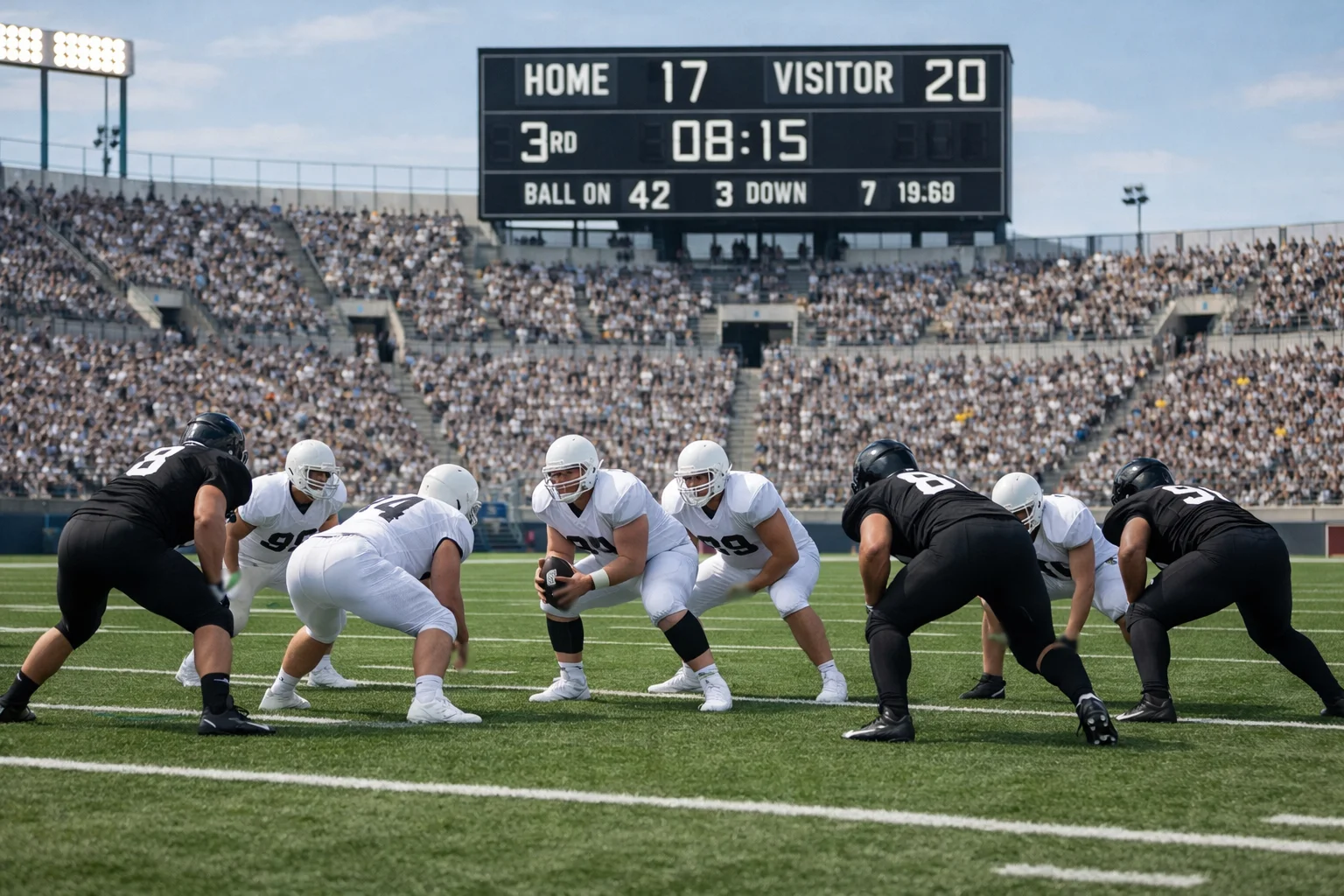
Point spread betting dominates football wagering for good reason. The spread levels the playing field between mismatched opponents, creating roughly 50/50 propositions that generate competitive odds. Instead of picking winners, you predict margins of victory, adding a layer of complexity that keeps both sides of every game interesting.
The mechanics are straightforward once you grasp the concept. When the Buffalo Bills are listed at -6.5 against the Miami Dolphins, Buffalo must win by seven or more points for spread bettors to cash. Miami at +6.5 covers if they lose by six or fewer points, or win outright. The half-point exists to eliminate ties, though whole number spreads do occur. A spread of -7 results in a push—a refund—if the favorite wins by exactly seven.
Key numbers transform basic spread betting into a more sophisticated endeavor. In football, games frequently end with margins of three (field goal) and seven (touchdown plus extra point). These numbers appear in final score differences more than any others. A spread of -2.5 differs significantly from -3.5 because that single point crosses the most common margin in football. Sharp bettors will pay extra juice to move a line across key numbers. Getting +3.5 instead of +3 at -120 instead of -110 often represents good value because of how often games land exactly on three.
Alternate spreads give you flexibility to adjust lines at the cost of changing odds. If you love the Chiefs but hate laying seven points, you might find them at -3.5 with +140 odds, or -10.5 at -180 odds. These alternatives let you express varying degrees of confidence. Buying points follows similar logic—paying extra to move the spread in your favor. Moving from -7 to -6.5 might cost you -125 instead of -110, but avoiding that push scenario could be worth the price.
Spread betting carries more nuance than beginners realize. Line movement reveals market sentiment and sharp action. A spread that opens at -3 and closes at -4.5 suggests heavy action on the favorite, possibly including sharp money. Closing line value—getting a better number than the final line—correlates strongly with long-term betting success. Professionals obsess over grabbing the best number because even half a point compounds over hundreds of wagers.
The vig, or juice, typically sits around -110 on both sides of a spread. This means you need to win about 52.4% of your bets just to break even. That margin might sound small, but consistently clearing that threshold separates profitable bettors from the rest. Understanding this mathematical reality should inform how selectively you bet.
Totals (Over/Under) Strategy

Totals betting, commonly called over/under, removes team allegiances from the equation entirely. You wager on combined points scored by both teams. Will the game exceed the posted total, or fall short? This bet type offers a completely different analytical approach than sides betting.
Sportsbooks employ teams of oddsmakers who set totals based on offensive efficiency ratings, defensive metrics, pace of play, weather forecasts, and historical matchup data. A game featuring two elite offenses and weak defenses might post a total of 52.5 points. A defensive slugfest between run-heavy teams could sit at 38.5. Your job is determining whether oddsmakers overestimated or underestimated the game’s scoring potential.
Several factors consistently influence game totals. Weather ranks among the most impactful—wind speeds above 15 mph suppress passing games, rain creates ball-handling issues, and extreme cold affects kicking and grip. Indoor games at stadiums like Las Vegas and Dallas typically see higher totals than outdoor venues in December and January. Pace of play matters tremendously. Teams that run frequently consume clock and reduce total possessions, while uptempo passing attacks generate more scoring opportunities for both sides.
Injury reports demand attention for totals bettors. A starting quarterback’s absence obviously impacts scoring potential, but so do injuries to key receivers, offensive linemen, and pass rushers. The absence of a dominant edge rusher might bump a total up slightly because the opposing offense projects to have more time in the pocket.
Team totals represent a useful variation. Instead of betting the combined score, you wager on one team’s individual output. If you love the Packers offense but worry the opposing defense might keep things low-scoring, a team total over lets you isolate that opinion. These markets also help in games with unclear totals—maybe you see Green Bay scoring 28 but have no read on the other side.
Alternate totals function like alternate spreads, letting you adjust the number at modified odds. Buying a total down from 47.5 to 44.5 might offer -180 on the over, while pushing it up to 50.5 could give you +150. First half and second half totals provide additional opportunities, particularly useful when you have reads on how teams script opening drives or fatigue in fourth quarters.
Prop Betting Guide

Proposition bets, or props, move beyond game outcomes to focus on individual performances and specific occurrences. The prop market has exploded in recent years, transforming from a niche product into one of the most popular betting categories. Modern sportsbooks offer dozens of props on every nationally televised game.
Player props dominate the landscape. Quarterback passing yards, rushing attempts, receiving yards for specific players, touchdown scorers—these markets let you bet on individual performances regardless of game outcome. If you believe Patrick Mahomes will shred a weak secondary but think the Chiefs might still lose, his passing yards prop lets you act on that belief.
The “anytime touchdown scorer” market deserves special attention. This prop wins if your selected player scores a touchdown at any point during the game, regardless of method. Running backs and goal-line threats typically offer shorter odds, while wide receivers and tight ends present longer prices. First touchdown scorer works similarly but requires your player to score the game’s opening touchdown—much harder to hit but with substantially better payouts.
Game props cover events not tied to individual players. Will there be a safety? What will the first scoring play be? Will either team score three consecutive times? These markets add entertainment value and let you express opinions on game flow rather than specific player performances.
Building effective prop strategies requires understanding correlation. Certain props naturally connect—high passing yards typically correlate with lower rushing attempts for quarterbacks, and high game totals correlate with increased statistical output across the board. Same-game parlays, discussed later, let you combine correlated props, but understanding these relationships also helps when betting props individually.
Prop pricing varies significantly between sportsbooks. One book might offer Derrick Henry over 79.5 rushing yards at -115 while another posts him at 82.5 yards at -110. Line shopping matters here because a few yards can represent the difference between a winning and losing ticket. Building a prop betting approach requires accounts at multiple books to consistently find the best numbers.
Research separates successful prop bettors from recreational ones. Target numbers matter—NFL running backs hit certain yard thresholds at predictable rates based on projected touches. Receiving props depend heavily on target share and defensive coverage schemes. The best prop bettors develop models or at least systematic approaches rather than betting hunches.
Parlay Betting Complete Guide
Parlays combine multiple selections into single wagers requiring all legs to win. The appeal is obvious: instead of betting three games separately at -110 each, combining them into a parlay creates a significantly higher payout. A three-team parlay at standard odds pays roughly 6-to-1 instead of three separate payouts that would net less than 3-to-1 on the same stake.
The math works against you, which is why sportsbooks love parlays. Each additional leg compounds the difficulty. If you assume 50% win rates on even-money bets, a two-team parlay wins 25% of the time, three teams wins 12.5%, four teams wins 6.25%, and so on. The payouts increase, but not as fast as the probability drops. This mathematical disadvantage is called the parlay tax, and it explains why recreational bettors fund sportsbook profits while sharp bettors generally avoid parlays.
Same-game parlays have become enormously popular since sportsbooks introduced them in 2019. These let you combine multiple outcomes from a single game—the Bengals to cover, Joe Burrow over 275 passing yards, and the game total under 48.5. Correlation between legs means sportsbooks cannot simply multiply standard odds; they use algorithms to calculate correlated parlay pricing. SGPs offer entertainment value and the occasional big payout, but they carry even worse mathematical expectations than traditional parlays.
Round robin betting creates multiple parlay combinations from your selected legs. Choosing four teams as a round robin might generate six two-team parlays, four three-team parlays, and one four-team parlay—eleven total wagers. This approach provides some hedge protection because not every leg needs to win for you to see some return. However, the multiple wagers require larger total stakes and still carry parlay-tax mathematics.
If you insist on parlaying, a few strategic approaches reduce the mathematical penalty. First, correlated parlays make logical sense when they are available. Betting a team to cover and the game to go over often represents positive correlation—the team covering likely means points were scored. Second, keep parlays small. Two or three legs maintains reasonable win probability. Third, never parlay heavy favorites. Laying -300 on three moneylines in a parlay destroys value because one upset wipes out your ticket while the parlay payout barely exceeds what straight bets would return.
Some professional bettors use parlays strategically by combining positive-expected-value plays that they cannot bet large enough individually due to sportsbook limits. This represents the exception rather than the rule—most bettors should view parlays as entertainment with negative expected value.
Teaser and Pleaser Bets
Teasers allow you to adjust point spreads in your favor across multiple games in exchange for reduced odds. A standard six-point teaser in football moves each spread six points your direction. If you teaser the Cowboys from -7 to -1 and the Rams from +3 to +9, both adjusted spreads must cover for the teaser to pay. Typical payouts for two-team six-point teasers land around -120 to -130.
The mathematics of teasers actually favor bettors in specific situations, making them one of the few parlay-style bets that sharp players utilize. The key involves crossing those valuable numbers we discussed earlier. A teaser that moves a spread from +1 to +7 crosses both three and seven—the two most common margins in football. Similarly, moving -8 to -2 crosses seven and three going the other direction. These “Wong teasers,” named after gambling author Stanford Wong who popularized the strategy, offer mathematically positive expected value when priced correctly.
Teaser strategy becomes more nuanced with totals. Standard teasers typically include sides only, but some books offer totals teasers. The value calculation differs because totals land on key numbers less predictably than sides. Most professional teaser bettors focus exclusively on sides crossing 3 and 7.
Pleaser bets work opposite to teasers—you move lines against yourself for higher payouts. Taking a favorite from -3 to -9 or an underdog from +7 to +1 dramatically reduces your win probability but increases potential returns. Pleasers appeal to bettors seeking lottery-style payoffs but carry significantly worse expected value than properly constructed teasers. The math rarely supports pleaser betting outside of specific situational hedging scenarios.
Futures Betting Explained

Futures markets let you bet on outcomes determined well into the future—Super Bowl winners, conference champions, division titles, and individual awards like MVP. These bets tie up your bankroll for extended periods but offer substantial payouts when you identify value early.
Super Bowl futures represent the flagship market. Before each season, you can back any team to win the championship at odds reflecting their perceived chances. Contenders like the Chiefs or 49ers might open around +500 to +800, while rebuilding franchises could be +10000 or longer. The appeal lies in getting early value before public betting and season results shorten odds on emerging contenders.
Timing matters significantly with futures. Odds shift throughout the season based on performance, injuries, and public betting patterns. Buying a team’s Super Bowl odds in March before free agency differs from buying in August after preseason or November after ten games. Generally, the earliest prices offer the most value because markets have not yet incorporated new information. However, in-season futures let you act on observations the market has not fully adjusted to.
Division and conference futures provide smaller-scale alternatives. Predicting division winners requires less variance than navigating the entire playoff bracket. These markets also move significantly based on divisional opponents’ injuries and performance. If a division leader loses their quarterback for the season, divisional rivals’ odds will shorten dramatically.
Player award futures—MVP, Offensive Player of the Year, Defensive Player of the Year, and Rookie of the Year—follow narratives as much as statistics. MVP voting typically favors quarterbacks on playoff teams with gaudy numbers. Understanding these voting tendencies helps identify futures value. A non-quarterback might post superior underlying stats but still lose to a quarterback with a compelling story.
Hedging futures becomes relevant as your team advances. If you hold a +3000 Super Bowl ticket on a team that reaches the championship game, you can bet against them in individual games to guarantee profit regardless of outcome. This locks in gains but sacrifices maximum potential payout. Whether to hedge depends on your bankroll needs, risk tolerance, and how much utility you assign to the hedge guarantee versus the upside.
Which Bet Type Is Right for You?
Selecting appropriate bet types depends on your experience level, risk tolerance, analytical strengths, and bankroll size. Beginners benefit from starting with moneylines and point spreads on games they genuinely understand. These straightforward markets teach fundamental concepts without the complexity of props or parlays.
Risk tolerance shapes bet type selection more than most bettors acknowledge. Conservative bettors gravitate toward spreads and totals where the juice stays relatively low and single-game variance is manageable. Aggressive bettors who enjoy higher variance might prefer props and same-game parlays despite worse mathematical expectations. Neither approach is inherently wrong—they reflect different goals. Entertainment-focused bettors rationally accept worse odds for more excitement.
Your analytical edge should guide market selection. If you excel at evaluating individual player performance, props offer the best venue for that skill. If you understand team dynamics and game flow better than player statistics, sides and totals make more sense. Specialization beats diversification in sports betting. Finding one or two bet types where you consistently identify value produces better results than dabbling across every market.
Bankroll considerations cannot be ignored. Parlays and aggressive props can devastate small bankrolls through normal variance. A $500 bankroll probably should not be allocated toward ten-leg parlays, regardless of how tempting the payouts appear. Flat betting spreads and totals with 1-2% of bankroll per wager provides sustainable exposure while protecting against ruin.
The best bettors maintain flexibility. Different weeks present different opportunities. Sometimes the spread values are obvious; other weeks the props look mispriced. Developing competency across multiple bet types lets you attack whatever markets present value rather than forcing action in your preferred category.
Conclusion
Football betting types might seem overwhelming initially, but each serves a distinct purpose that becomes clear with experience. Moneylines offer simplicity and value on underdogs. Spreads level the playing field and dominate handle for good reason. Totals let you bet on game flow without picking sides. Props isolate individual performances. Parlays provide entertainment and long-shot payouts at mathematical cost. Teasers can actually offer positive expected value when constructed properly. Futures let you invest in season-long outcomes.
Mastering these bet types takes time and, inevitably, some losses. Start with the basics, understand the math behind each wager, and gradually expand your repertoire as you identify where your analytical edge lies. The goal is not just understanding how bets work but knowing when each type offers the best opportunity to express your opinion on a game.
Betting should remain entertainment first. Set limits, practice responsible bankroll management, and never wager more than you can afford to lose. The resources at the National Council on Problem Gambling (1-800-GAMBLER) are available if betting stops being fun. With that foundation in place, understanding bet types positions you to enjoy football season with informed, strategic wagers rather than blind guesses.
