


Let’s address the uncomfortable truth first: most sports bettors lose money over time. The sportsbook’s built-in edge, typically around 4.5% on standard bets, ensures that casual bettors funding their entertainment eventually contribute to the house’s bottom line. This mathematical reality does not mean winning is impossible, but it does mean that consistent profitability requires more than enthusiasm and football knowledge. It requires disciplined strategy, rigorous analysis, and emotional control that most bettors never develop.
What separates long-term winners from the losing majority comes down to process rather than picks. Winning bettors approach wagering as a probabilistic exercise rather than a prediction contest. They understand that being right 55% of the time at standard juice makes them profitable, while being right 50% of the time makes them losers despite breaking even on predictions. This mindset shift transforms how you evaluate bets, manage your bankroll, and respond to inevitable losing streaks.
The strategies outlined here will not guarantee profits—nothing can in a game with inherent uncertainty. However, applying these principles consistently will give you the best possible chance of joining the small percentage of bettors who actually make money. Whether you’re betting recreationally with modest sums or treating this as a serious analytical pursuit, these fundamentals separate informed wagering from blind gambling.
Foundational Strategies for Football Bettors

Before diving into advanced concepts, every bettor needs to master three foundational practices that apply regardless of bankroll size or betting frequency. Skipping these basics while chasing sophisticated strategies is like studying calculus before learning arithmetic.
Line shopping represents the single most accessible edge available to recreational bettors. Different sportsbooks post different odds on the same events, and these differences compound dramatically over hundreds of wagers. Finding the Chiefs at -6.5 instead of -7 might seem trivial on a single bet, but that half-point represents real money across a season. The same applies to juice—betting at -105 instead of -110 improves your required win rate from 52.4% to 51.2%. Maintaining active accounts at three to five major sportsbooks takes minimal effort while providing constant access to the best available numbers. Bettors who refuse to line shop are essentially volunteering to pay higher prices for identical products.
Record keeping separates serious bettors from recreational ones pretending to be serious. Tracking every wager forces accountability and provides data for honest self-assessment. Your records should include date, sport, bet type, odds, stake, result, and profit or loss. Over time, this data reveals patterns: maybe you’re profitable on NFL spreads but hemorrhaging money on player props, or perhaps your college football bets consistently underperform. Without records, you’re relying on selective memory that conveniently forgets losses while celebrating wins. The uncomfortable truth often emerges when bettors finally calculate their actual results rather than their remembered ones.
Emotional discipline sounds like generic advice until you experience the powerful urge to chase losses after a bad beat or increase stakes following a winning streak. Emotional betting represents perhaps the most common reason recreational bettors lose more than they should. A sound strategy executed emotionally becomes an unsound strategy. When you’re angry about a loss, you’re more likely to bet impulsively on the next game without proper analysis. When you’re euphoric after wins, you’re more likely to overestimate your edge and increase stakes beyond what your actual advantage justifies. The solution involves predetermined rules that constrain behavior during emotional states: fixed unit sizes, mandatory cooling-off periods after certain losses, and absolute refusal to deviate from your staking plan regardless of recent results.
Value Betting Explained

Value betting represents the core concept underlying all profitable sports wagering. A value bet exists when the odds offered exceed the true probability of an outcome occurring. If you believe the Bills have a 55% chance of covering a spread but the sportsbook’s odds imply only 48% probability, you have identified positive expected value. Betting on such situations consistently, regardless of individual outcomes, produces long-term profit.
Understanding implied probability unlocks value identification. American odds convert to implied probability through simple formulas. For favorites, divide the odds by the odds plus 100, then multiply by 100 to get a percentage. Odds of -150 imply 60% probability: 150 / (150 + 100) = 0.60. For underdogs, divide 100 by the odds plus 100. Odds of +200 imply 33.3% probability: 100 / (200 + 100) = 0.333. Once you calculate implied probability, compare it to your own probability assessment. Any discrepancy where your estimated probability exceeds the implied probability represents potential value.
The challenge lies in accurately assessing true probabilities, which is far more difficult than calculating implied ones. Sportsbooks employ teams of oddsmakers, sharp bettors, and increasingly sophisticated models to set lines. Beating these lines consistently requires either superior information, better analytical models, or identifying specific market inefficiencies that others miss. Most recreational bettors overestimate their ability to assess probabilities accurately, which is precisely why they lose.
Market inefficiencies do exist, typically in areas where sportsbooks have less data or where public betting patterns skew lines away from true probabilities. Prop bets, particularly in smaller markets, often carry more inefficiency than main lines that receive heavy sharp action. College football, with its hundreds of teams and regional betting patterns, presents more opportunities than the NFL where every game receives intense scrutiny. Live betting markets, forced to update rapidly, occasionally misprice situations that prepared bettors can exploit. Seeking value means concentrating your action in areas where your analysis might actually exceed market accuracy rather than competing head-to-head against sharp money on heavily bet NFL spreads.
Key Numbers in NFL Betting
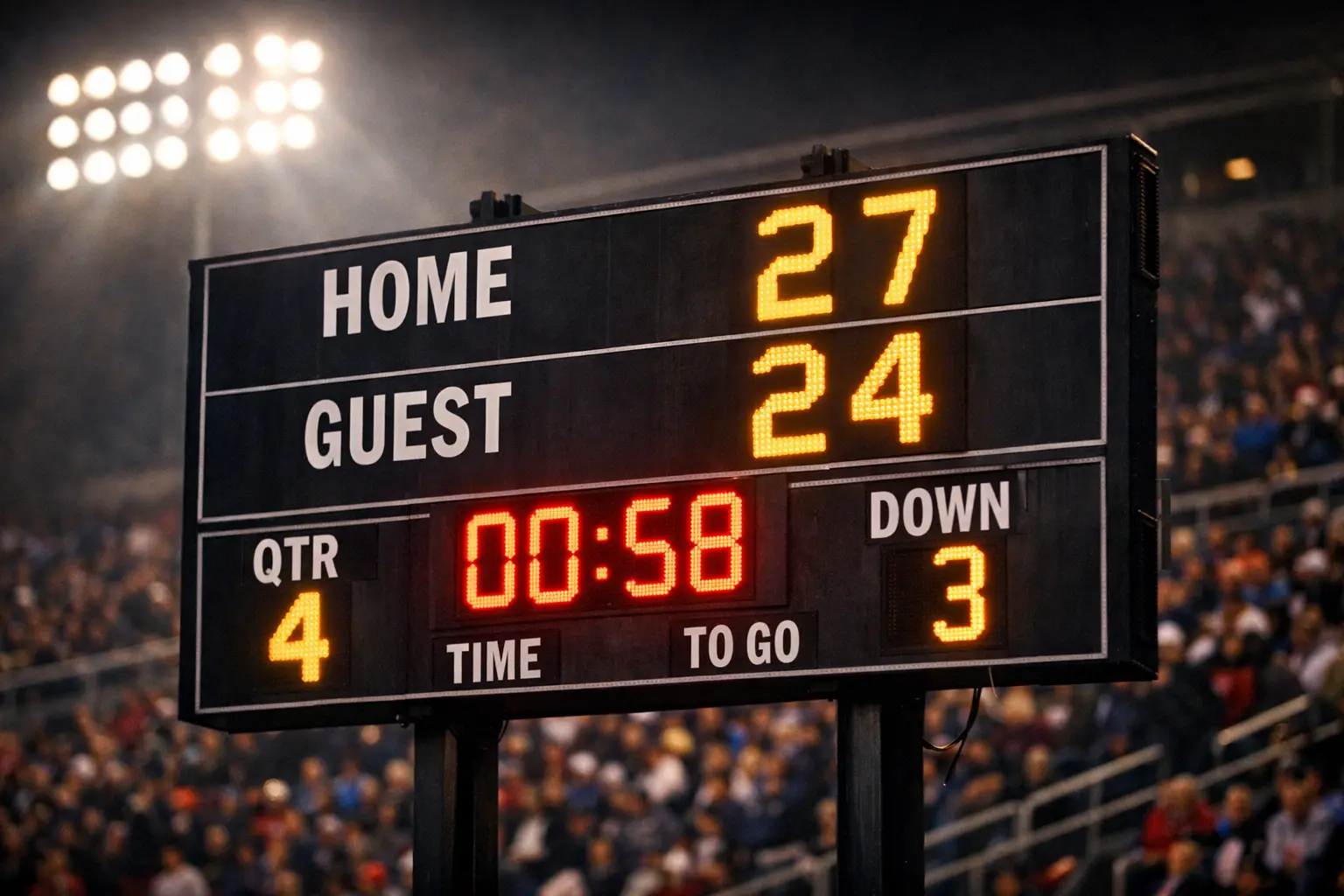
Football’s scoring structure creates natural margins that appear in final score differences far more frequently than others. Understanding these key numbers transforms basic spread betting into a more informed exercise and influences when buying or selling points makes mathematical sense.
The numbers 3 and 7 dominate NFL margin distributions for obvious reasons: field goals score three points and touchdowns with extra points score seven. Roughly 15% of NFL games end with a margin of exactly three points, and another 9% land on seven. These two numbers alone account for nearly a quarter of all game outcomes. Compare this to margins like 5 or 11, which occur in fewer than 3% of games each.
This distribution has practical implications for spread betting. A spread of -2.5 differs meaningfully from -3.5 because that single point crosses the most common margin in football. Similarly, spreads around 7 carry different risk profiles than those around 6 or 8. When sportsbooks offer alternate lines, paying extra juice to move across key numbers often represents good value. Moving from +2.5 to +3.5 might cost -125 instead of -110, but gaining coverage on the most frequent margin justifies that price.
Buying points makes sense selectively, particularly when crossing key numbers at reasonable prices. Moving a spread from -7 to -6.5 protects against the second most common margin at relatively low cost. However, buying points across non-key numbers rarely provides sufficient value—moving from -5 to -4.5 costs extra juice while crossing margins that occur infrequently. Some professional bettors focus specifically on key number situations, looking for games where they can land on favorable numbers while opponents land on unfavorable ones.
Teaser betting strategies rely heavily on key number analysis. The Wong teaser approach specifically targets crossing both 3 and 7 in the same teaser leg. Moving a spread from +1.5 to +7.5 with a six-point teaser crosses both key numbers, significantly improving coverage probability. These mathematically advantageous teasers can offer positive expected value at standard pricing, making them one of the few parlay-style bets that sharp bettors actually utilize.
Situational Handicapping
Beyond statistical analysis, situational factors influence NFL game outcomes in ways that casual bettors often overlook. Professional handicappers incorporate scheduling spots, motivational factors, and contextual elements that pure numbers miss.
Scheduling spots matter because NFL teams face vastly different preparation circumstances throughout the season. A team playing its third road game in four weeks faces disadvantages compared to a team resting at home. Teams coming off Monday Night Football with a short week before a Thursday game perform measurably worse on average. The dreaded West Coast team traveling east for a 1 PM kickoff faces circadian challenges that affect performance. Conversely, teams coming off bye weeks typically perform better, having extra preparation time and rest. Identifying extreme scheduling spots—positive or negative—provides an edge when the betting market hasn’t fully adjusted.
Motivational factors introduce human elements that statistical models struggle to capture. Revenge games, where teams face opponents who previously embarrassed them, occasionally produce unusual effort levels. Teams eliminated from playoff contention may lack motivation in late-season games, while opponents fighting for positioning bring maximum intensity. Divisional matchups carry emotional weight that non-conference games lack. Coaching changes, whether mid-season firings or announced departures, affect team dynamics unpredictably. These factors resist quantification but matter in specific situations.
Travel and rest advantages compound across the season. The NFL schedule creates cumulative fatigue that peaks late in the year. Teams with favorable scheduling—more home games in a stretch, fewer time zone crossings, better bye week placement—hold subtle advantages that accumulate. Sharp bettors track rest days for individual games, noting when one team has significant rest advantages. A team with ten days rest facing an opponent with only six days preparation enters with a measurable edge.
Divisional matchups deserve specific attention because they behave differently than other games. Teams that play each other twice annually know their opponents intimately, reducing the impact of scheme advantages. Underdogs perform slightly better in divisional games historically, possibly because familiarity reduces talent gaps. Additionally, divisional games late in the season often carry playoff implications that elevate intensity regardless of overall record.
Using Advanced Analytics
Modern football analytics provide insights unavailable to previous generations of bettors. While these metrics don’t guarantee winning picks, they offer more accurate performance assessment than traditional statistics like total yards or win-loss records.
DVOA, or Defense-adjusted Value Over Average, measures play-by-play efficiency while accounting for opponent quality. A team that gains yards against elite defenses receives more credit than one padding stats against weak opponents. DVOA breaks down into offensive, defensive, and special teams components, revealing which units actually drive team performance. The metric correlates with future performance better than point differential or record, making it useful for identifying teams whose actual quality differs from public perception. FTN Fantasy publishes weekly DVOA rankings throughout each NFL season (the metric was originally developed by Football Outsiders before that site closed in 2023).
EPA, or Expected Points Added, evaluates each play’s contribution to scoring probability. Rather than treating all gains equally, EPA recognizes that a five-yard gain on third-and-four differs vastly from the same gain on third-and-fifteen. Aggregating EPA reveals which teams consistently create valuable plays versus those accumulating empty yardage. Quarterback EPA particularly illuminates which signal callers actually contribute to winning versus those with inflated traditional statistics. Sites like rbsdm.com and nflfastR provide EPA data for public analysis.
Success rate measures how often plays meet situational expectations—gaining 40% of needed yards on first down, 60% on second down, or 100% on third and fourth down. Teams with high success rates sustain drives consistently, while low success rate teams rely on explosive plays that may or may not materialize. Combining EPA with success rate reveals offensive and defensive profiles: some teams generate value through steady efficiency while others depend on big-play variance.
Accessing these analytics requires knowing where to look. Football Outsiders, The Athletic, and various independent analysts publish weekly breakdowns using advanced metrics. Twitter and Substack host analytical communities that share insights freely. Building a basic understanding of these concepts takes modest effort; integrating them into your handicapping process takes practice but provides information advantages over bettors relying solely on traditional statistics and eye tests.
Timing Your Bets

When you place your bet matters nearly as much as what you bet on. Line movement between opening and closing reflects market information processing, and positioning yourself correctly within this movement affects long-term results.
Opening lines represent the market’s first attempt at pricing a game, typically released Sunday evening for the following week’s NFL slate. These early numbers carry more uncertainty because the market hasn’t yet incorporated betting action from sharp players. Closing lines, set just before kickoff, reflect all available information and heavy betting volume. Research consistently shows that closing line value—getting a better number than the final line—correlates strongly with long-term profitability. Bettors who consistently beat closing lines tend to be winners; those who consistently get worse numbers tend to lose.
Knowing when to bet early versus waiting depends on which side you’re taking and expected line movement direction. If you believe sharp money will move a line in your direction, waiting allows the market to do your work. If you expect public betting to move the line against you, betting early locks in a better number before the masses arrive. Generally, underdogs receive more public money than their sharp support warrants, causing lines to move toward favorites as the week progresses. However, this pattern varies by game profile, and some underdogs attract sharp action that moves lines the opposite direction.
Following sharp money involves identifying where professional bettors are placing action. Significant line movement on light betting volume suggests sharp action. If a spread opens at -3 and quickly moves to -4 without massive public betting volume, professionals likely triggered the move. Reverse line movement—when a line moves opposite to the betting percentage—indicates sharp money opposing public sentiment. Services track these patterns, though interpreting them correctly requires experience distinguishing meaningful signals from noise.
The practical approach for most bettors involves having a target number for each game and acting when that number becomes available. If you determine the Bills deserve to be -6, bet them when you see -5.5 or -6, regardless of whether that appears Sunday night or Thursday morning. Disciplined adherence to your own projections prevents both missing good numbers and chasing bad ones.
Sport-Specific Strategies
While general principles apply across football betting, NFL and college football present distinct challenges requiring adapted approaches.
NFL betting offers the most efficient markets in sports, meaning edges are smaller and harder to find. Every game receives intense analytical scrutiny from sharps, media, and sophisticated models. The relative parity among teams—any NFL squad can beat any other on a given week—creates genuine uncertainty that makes consistent winning difficult. Successful NFL bettors typically specialize in specific areas: perhaps they excel at totals analysis, or identify coaching mismatches, or model weather impacts better than the market. Generalist approaches rarely work because competition is too fierce across all markets.
College football presents more opportunities precisely because the market cannot process its scope efficiently. With over 130 FBS teams playing hundreds of games weekly, oddsmakers and sharp bettors cannot analyze every matchup deeply. Regional games between non-ranked opponents receive less attention than SEC showdowns. Group of Five conferences and their unique dynamics often get mispriced. Public betting patterns skew heavily toward nationally televised games and prestigious programs, sometimes creating value on overlooked opponents. The tradeoff involves more volatility—mismatches and blowouts occur more frequently, making individual game outcomes less predictable even when you’ve correctly identified value.
Playoff and postseason adjustments become necessary as the betting landscape shifts. NFL playoff games attract massive public betting volumes that can move lines significantly. Motivation becomes uniform—every remaining team fights for survival—eliminating many situational factors relevant during the regular season. College bowl season presents different challenges: some teams are highly motivated while others effectively quit weeks before their game, and preparation time variations create significant uncertainty. Championship games and national semifinals attract betting volume resembling Super Bowls, with lines potentially less efficient than regular season games due to public betting pressure.
Common Mistakes to Avoid

Understanding what not to do matters as much as knowing correct strategies. These common errors destroy bankrolls more reliably than bad picks.
Chasing losses represents the most destructive pattern in sports betting. After losing, the natural instinct to recover quickly leads bettors to increase stakes on subsequent wagers. This compounds negative variance—a losing streak becomes catastrophic when each subsequent bet grows larger. The mathematical reality is that chasing losses increases the probability of ruin dramatically. Proper bankroll management requires accepting that losing periods happen and maintaining consistent stake sizes regardless of recent results. If your standard bet is two percent of bankroll, that percentage should remain constant whether you’re riding a winning streak or absorbing a tough week.
Recency bias causes bettors to overweight recent performances while underweighting larger sample sizes. A team that just won 45-10 looks unstoppable; a team coming off an embarrassing loss looks broken. In reality, individual game results contain significant noise that masks true team quality. Sharp bettors know that last week’s performance predicts next week’s outcome poorly compared to season-long metrics. Resist the urge to dramatically adjust opinions based on single games. Instead, incorporate recent results appropriately within the context of broader performance patterns.
Ignoring line value leads bettors to bet on teams they think will win or cover without considering whether the price is right. This represents a fundamental misunderstanding of what sports betting requires. Picking winners matters less than identifying when odds exceed true probability. You might correctly predict that the Chiefs will beat the Raiders, but if the spread is inflated beyond what the matchup warrants, the winning prediction becomes a losing bet. Every wager should begin with the question: do the odds offered provide value? If not, no amount of confidence in the pick justifies the bet.
Conclusion
Winning at football betting requires accepting that consistent profitability is difficult and demands genuine work. The strategies covered here—line shopping, value identification, key number awareness, situational handicapping, advanced analytics, bet timing, and emotional discipline—provide the framework for informed wagering. None guarantee success, but together they maximize your probability of joining the minority of bettors who actually profit.
Start with the foundations: open multiple sportsbook accounts, begin tracking every bet, and develop the emotional discipline to stick with your strategy during losing streaks. Build analytical skills gradually, incorporating advanced metrics and situational factors as you become comfortable with the basics. Specialize in areas where you might develop genuine edges rather than spreading yourself thin across every market.
Most importantly, bet responsibly. Set limits, stick to them, and view betting as entertainment first. The resources at the National Council on Problem Gambling are available at 1-800-GAMBLER if betting becomes problematic. With proper expectations and disciplined execution, football season becomes more engaging through informed wagering rather than blind guessing.
